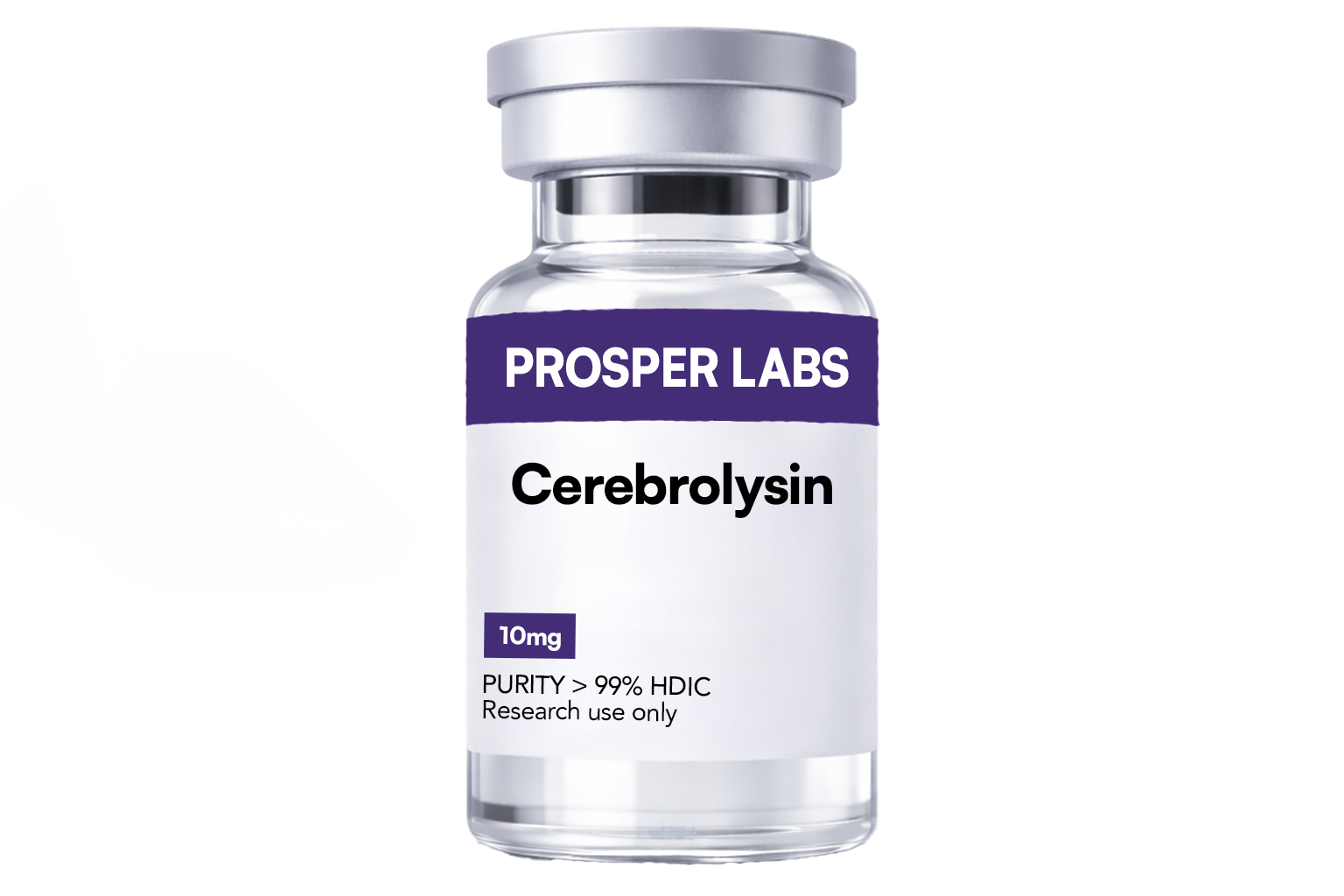
Cerebrolysin
Product Description
Cerebrolysin | Research Use Only
What it is
Cerebrolysin is a peptide-based neurotrophic preparation derived from purified porcine brain proteins and composed of low-molecular-weight peptides and amino acids. In the literature, it is described as a neuropeptide preparation with neuroprotective and neurorestorative properties, which is why it appears in research involving stroke, traumatic brain injury, neurorehabilitation, and neurodegenerative disease. Sources: Cerebrolysin Product Monograph, Onose et al. review, Mureșanu et al. 2022.
Origins and scientific context
Cerebrolysin was developed as a biologically active peptide preparation intended to mimic aspects of endogenous neurotrophic support in the central nervous system. Reviews and product materials describe it as a complex mixture designed to influence neuronal survival, plasticity, and recovery processes after neurological injury. Over time, it has been studied across stroke care, traumatic brain injury, dementia, and disorders of consciousness, with particular interest in its possible neurorecovery and neurorepair effects. Sources: Cerebrolysin Product Monograph, TBI systematic review 2023, Mureșanu et al. 2022.
Molecular profile
Unlike a single defined peptide, Cerebrolysin is a mixture of biologically active low-molecular-weight peptides and free amino acids, so it does not have one fixed molecular formula or one single molecular weight in the way a discrete compound like cagrilintide does. Official product information describes it by composition and pharmacologic character rather than as one isolated molecular entity, which is why laboratory and clinical references discuss it as a peptide preparation rather than a single molecule. Sources: Cerebrolysin Product Monograph, Onose et al. review, Seidl et al. 2024.
Scientific overview
Cerebrolysin is studied because its peptide mixture has been reported to show neurotrophic factor-like, neuroprotective, and neurorestorative activity in preclinical and clinical research. Official and review sources describe effects on neuronal survival pathways, neuroplasticity, functional recovery, and post-injury repair biology. More recent reviews continue to discuss Cerebrolysin in ischemic stroke and traumatic brain injury research, while also emphasizing that outcomes depend on indication, study design, and timing of treatment. Sources: Cerebrolysin Product Monograph, Mureșanu et al. 2022, Jarosz et al. 2023, Kandasamy et al. 2025.
What researchers study with Cerebrolysin
Common research focus areas include
• Ischemic stroke recovery and neurorehabilitation
• Traumatic brain injury and functional recovery models
• Neuroprotection and neurorestoration signaling
• Disorders of consciousness and cognitive recovery research
• Dementia and neurodegenerative disease support pathways
Sources: Onose et al. review, Mureșanu et al. 2022, Jarosz et al. 2023, ClinicalTrials.gov NCT02541227.
Regulatory and compliance notice
Research Use Only. Not for human or veterinary use. Cerebrolysin is discussed in international medical literature and is marketed in some countries, but it is not FDA-approved in the United States. ClinicalTrials.gov records also note that Cerebrolysin has not been approved by the U.S. Food and Drug Administration. Its use in published studies or in non-U.S. markets does not mean FDA approval or established safety and efficacy under U.S. standards. Sources: ClinicalTrials.gov NCT02541227, Berk et al. 2013, Alzheimer’s Drug Discovery Foundation summary.
Citations and references
EVER Neuro Pharma. Cerebrolysin Product Monograph. Official product information describing Cerebrolysin as a peptide preparation with neurotrophic and neuroprotective properties.
https://cerebrolysin.com/wp-content/uploads/2022/06/CEREBROLYSIN_ProductMonograph_2021_SCREEN.pdf
Onose G, et al. Neuroprotective and consequent neurorehabilitative clinical outcomes, in patients treated with the pleiotropic drug Cerebrolysin. Review describing Cerebrolysin as a peptide mixture with neurotrophic activity.
https://pmc.ncbi.nlm.nih.gov/articles/PMC3019019/
Mureșanu DF, et al. Role and Impact of Cerebrolysin for Ischemic Stroke Care. Review discussing neurorestorative and safety data in ischemic stroke care.
https://pmc.ncbi.nlm.nih.gov/articles/PMC8911124/
Jarosz K, et al. Cerebrolysin in Patients with Traumatic Brain Injury: Systematic Review and Meta-Analysis.Review covering clinical research in TBI.
https://pmc.ncbi.nlm.nih.gov/articles/PMC10046100/
Seidl LF, et al. Comparing the biological activity and composition of Cerebrolysin and peptide preparations sold as nutritional supplements. Discusses peptide composition context and differentiation from other preparations.
https://pmc.ncbi.nlm.nih.gov/articles/PMC11080511/
Kandasamy G, et al. Evaluating the Effect of Cerebrolysin as an Adjuvant to Standard Therapy in Acute Ischemic Stroke. Recent study examining stroke outcomes with adjunctive Cerebrolysin.
https://pmc.ncbi.nlm.nih.gov/articles/PMC12472081/
Berk C, et al. Successes and Failures for Drugs in Late-Stage Development for Alzheimer’s Disease. Notes that Cerebrolysin had not been approved by FDA in the United States.
https://pmc.ncbi.nlm.nih.gov/articles/PMC4000701/
ClinicalTrials.gov. NCT02541227 — Cerebrolysin REGistry Study in Stroke. Includes U.S. regulatory note that the product has not been approved by FDA.
https://clinicaltrials.gov/study/NCT02541227
Alzheimer’s Drug Discovery Foundation. Cerebrolysin & Your Brain. Summary noting use in some countries and lack of U.S. approval.
https://www.alzdiscovery.org/cognitive-vitality/ratings/cerebrolysin
COA Testing
The Certificate of Analysis for this product is shown directly below for easier review.
Certificate of Analysis coming soon
COA will display here once attached.