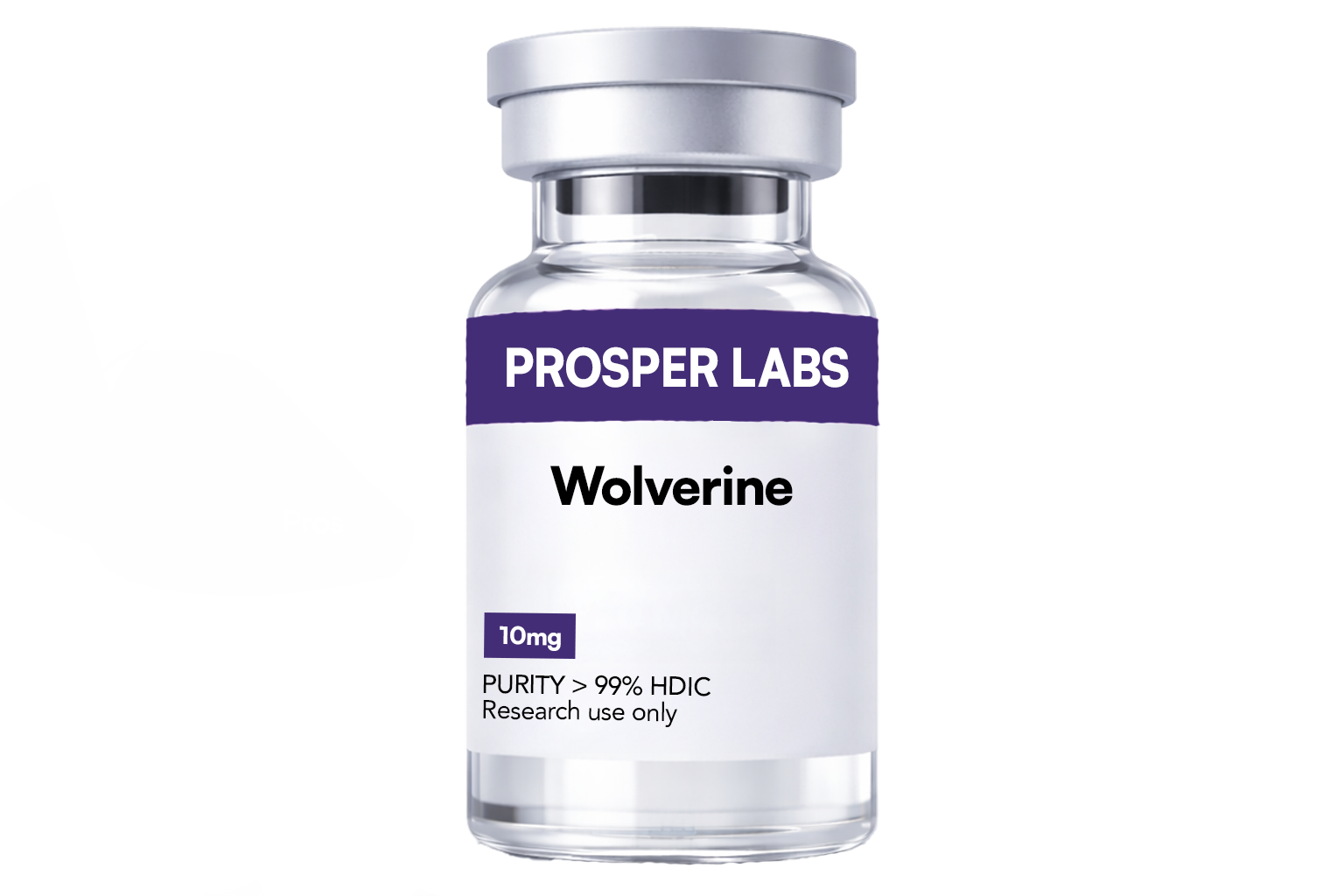
Wolverine
Product Description
Wolverine Peptides (BPC-157 / TB-500 Blend) | Research Use Only
What it is
Wolverine Peptides is a research-use nickname commonly used for a peptide blend containing BPC-157 and TB-500. In research-product listings, this blend is generally presented as a combination reagent intended for laboratory and experimental use rather than as a single naturally occurring peptide entity.
Origins and design rationale
The “Wolverine” name appears to come from the idea of combining two widely discussed research peptides into one blended product for experimental convenience. Product listings commonly frame the blend as a way to study the combined research characteristics of BPC-157 and TB-500 in one formulation, especially in experimental contexts focused on tissue-response, cellular repair, and recovery-related pathways. Because this is a vendor-style blend name, exact composition can vary by supplier.
Molecular profile
Unlike a single defined peptide, Wolverine Peptides is usually a combination blend rather than one discrete molecule with one molecular weight. The most common version identified in product listings is BPC-157 (10 mg) / TB-500 (10 mg), although some vendors use different strengths or include additional components in broader “Wolverine” style blends. That is why the exact molecular profile should be tied to the specific product formula on the label rather than treated as one uniform peptide standard.
Scientific overview
In simplified terms, Wolverine Peptides is used as a label for a blended research reagent intended to let researchers examine the combined experimental behavior of BPC-157 and TB-500 in one product. In mechanistic discussions, vendors and research-facing listings commonly associate these components with laboratory interest in tissue response, angiogenesis-related signaling, cell migration, and repair-associated pathways, though the blend name itself is commercial shorthand rather than a formal scientific classification.
What researchers study with Wolverine Peptides
Key research focus areas often include
• Multi-peptide blend behavior in experimental systems
• Tissue-response and repair-related research models
• Cell migration and angiogenesis-related pathway studies
• Comparative testing of BPC-157 / TB-500 blends versus single-peptide controls
Regulatory and compliance notice
Research Use Only. Not for human or veterinary use. This description is provided for scientific context and must not be used to market Wolverine Peptides, BPC-157, TB-500, or any related blend for diagnosis, cure, mitigation, treatment, or prevention of disease. Research-use product pages for this blend also commonly state that it is intended strictly for in vitro or non-clinical laboratory research.
Citations and references
PubChem compound entry for BPC-157, includes molecular formula and molecular weight.
COA Testing
The Certificate of Analysis for this product is shown directly below for easier review.
Certificate of Analysis coming soon
COA will display here once attached.