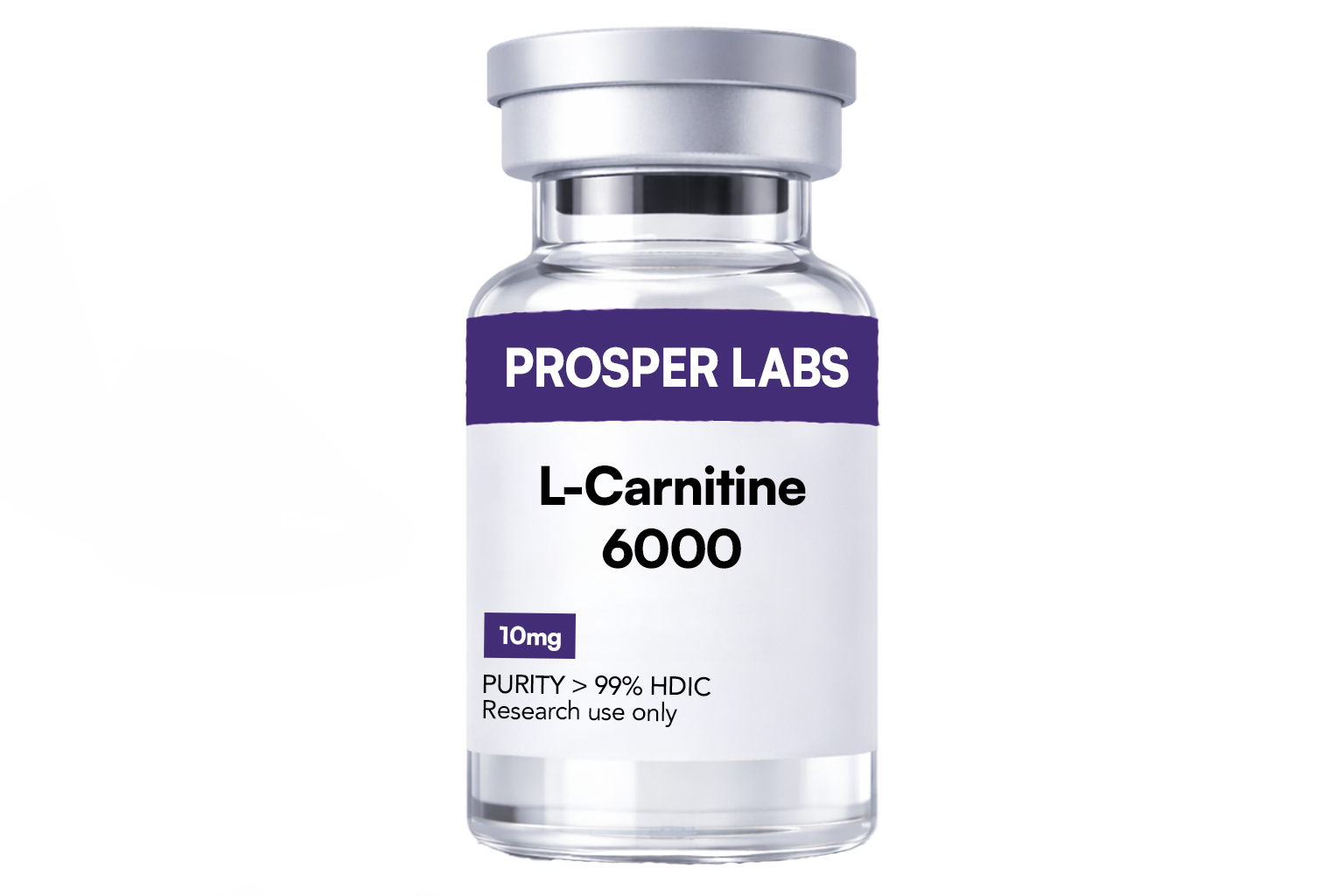
L-Carnitine 6000MG
Product Description
L-Carnitine | Research Use Only
What it is
L-Carnitine is a naturally occurring quaternary ammonium compound involved in cellular energy metabolism. In the scientific literature, it is widely described as a key molecule in the transport of long-chain fatty acids into mitochondria for β-oxidation, which is why it is commonly studied in metabolism, mitochondrial biology, and cellular energy research.
Origins and scientific context
L-Carnitine is not a synthetic peptide analog but an endogenous compound biosynthesized in mammals from lysine and methionine through multi-step enzymatic pathways. Reviews of carnitine biology describe its synthesis mainly in the liver and kidney and emphasize its importance in maintaining mitochondrial substrate handling and acyl-group balance.
Molecular profile
PubChem lists L-Carnitine with the molecular formula C7H15NO3 and a molecular weight of approximately 161.20 g/mol. It is commonly identified as the naturally occurring (-)-carnitine isomer, which is the biologically relevant form discussed in metabolic research.
Scientific overview
In simplified terms, L-Carnitine is used in research to study fatty acid transport, mitochondrial function, acyl-CoA buffering, and energy metabolism. Foundational reviews describe its established role as a carrier of activated fatty acids and acetate across the inner mitochondrial membrane, while newer reviews expand its relevance to broader mitochondrial and metabolic research contexts.
What researchers study with L-Carnitine
Key research focus areas often include
• Mitochondrial fatty acid transport and β-oxidation
• Carnitine biosynthesis and transport systems
• Cellular energy metabolism and acyl-group balance
• Oxidative stress and redox-related experimental models
Regulatory and compliance notice
Research Use Only. Not for human or veterinary use. This description is provided for scientific context and must not be used to market L-Carnitine for diagnosis, cure, mitigation, treatment, or prevention of disease.
Citations and references
PubChem compound entry for L-Carnitine, includes molecular formula and molecular weight.
COA Testing
The Certificate of Analysis for this product is shown directly below for easier review.
Certificate of Analysis coming soon
COA will display here once attached.