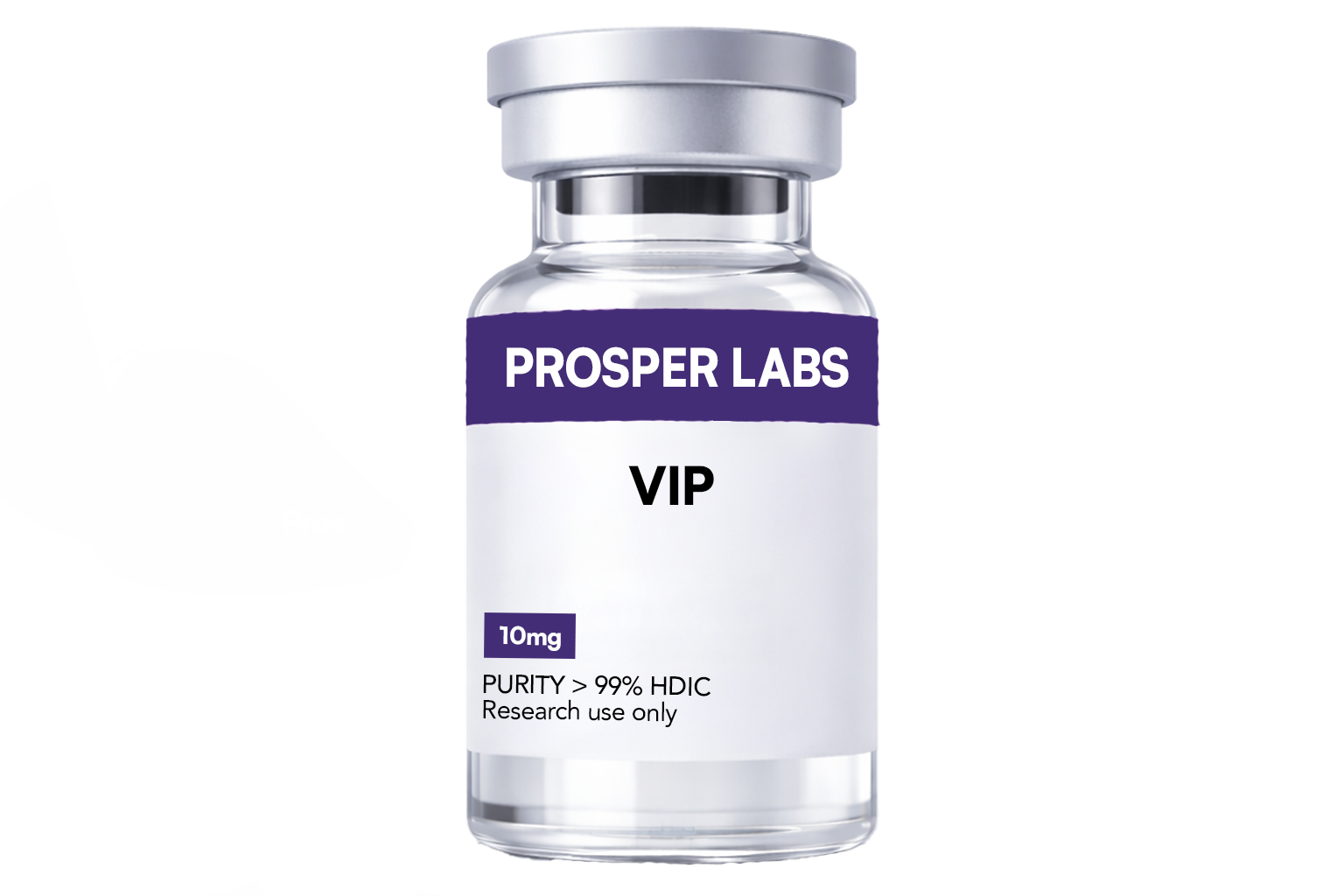
VIP
Product Description
VIP Peptide | Research Use Only
What it is
VIP, short for vasoactive intestinal peptide, is a naturally occurring 28-amino-acid neuropeptide belonging to the secretin-glucagon peptide family. In the scientific literature, VIP is described as a broadly distributed signaling peptide active in the nervous system, gastrointestinal tract, and immune system, which is why it is widely studied in neuroendocrine, receptor, and immunology research.
Origins and scientific context
VIP was originally identified as an intestinal peptide with vasodilatory activity, but later research established it as a multifunctional neuropeptide with broad physiologic signaling roles. Reviews describe VIP as being abundantly expressed in the central and peripheral nervous systems as well as in the gastrointestinal tract, where it participates in diverse regulatory processes.
Molecular profile
PubChem lists vasoactive intestinal peptide with the molecular formula C147H237N43O43S and a molecular weight of approximately 3326.8 g/mol. The literature consistently identifies VIP as a 28-residue peptide, and receptor-focused reviews note that its main biologic actions are mediated primarily through the VPAC1 and VPAC2 receptors, while PAC1 has much lower affinity for VIP in most physiologic contexts.
Scientific overview
In simplified terms, VIP is used in research to study VPAC receptor signaling, cAMP-mediated intracellular pathways, and broader neuroimmune and gastrointestinal regulatory biology. Reviews describe VIP signaling through class B G protein-coupled receptors and link it to processes involving secretion, smooth muscle regulation, vasodilation, circadian signaling, and immune modulation in experimental systems.
What researchers study with VIP Peptide
Key research focus areas often include
• VPAC1 and VPAC2 receptor signaling pathways
• Neuroendocrine and gastrointestinal regulatory models
• Immune-cell signaling and immunomodulatory responses
• Circadian and neuropeptide pathway research
Regulatory and compliance notice
Research Use Only. Not for human or veterinary use. This description is provided for scientific context and must not be used to market VIP peptide for diagnosis, cure, mitigation, treatment, or prevention of disease.
Citations and references
COA Testing
The Certificate of Analysis for this product is shown directly below for easier review.
Certificate of Analysis coming soon
COA will display here once attached.