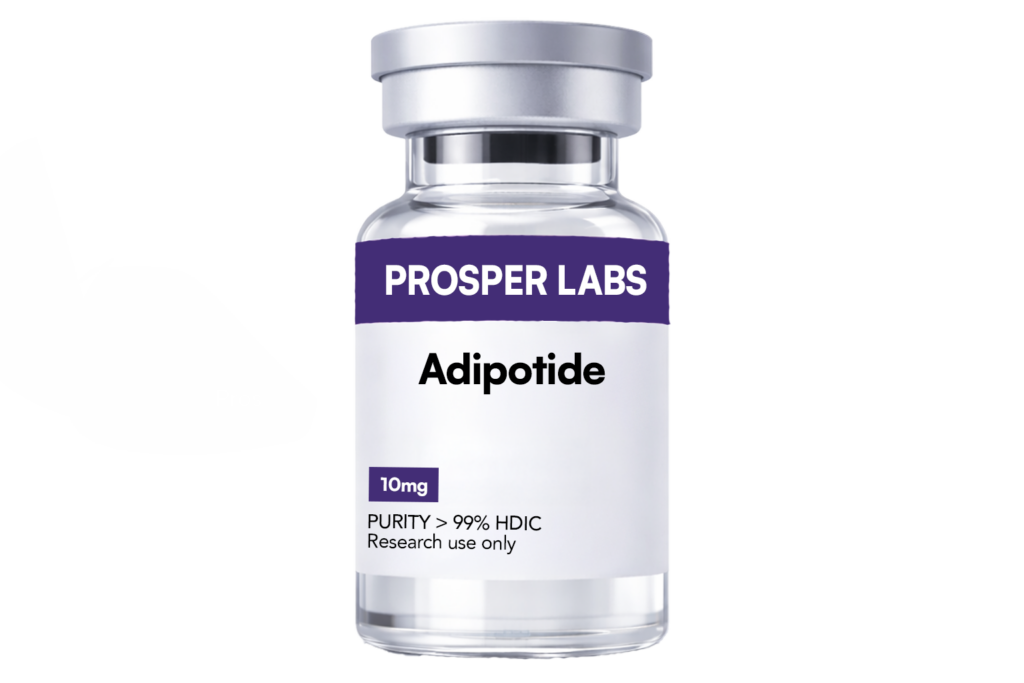
Adipotide
For research / laboratory use only. Not for human consumption.
Product Description
Adipotide | Research Use Only
What it is
Adipotide, also known as prohibitin-targeting peptide 1 or FTPP, is an investigational peptidomimetic studied for its ability to target blood vessels that supply white adipose tissue. It is designed to bind prohibitin in white fat vasculature and deliver a proapoptotic signal, which is why it has appeared in research on obesity, adipose tissue biology, and metabolic dysfunction. Sources: NCI Drug Dictionary, PubChem compound record, Barnhart et al. PMC.
Origins and scientific context
Adipotide emerged from vascular targeting research that aimed to identify tissue-specific “zip codes” on blood vessels and use them to selectively deliver therapeutic payloads. In this case, the compound was developed to recognize markers associated with white adipose tissue vasculature, particularly prohibitin, and then trigger apoptosis in the targeted vascular cells. This approach made adipotide notable in preclinical obesity research because it was not designed as a classic appetite suppressant but rather as a targeted adipose-vasculature agent. Sources: NCI Drug Dictionary, Barnhart et al. PMC, Peptides as Therapeutic Agents review.
Molecular profile
PubChem lists Adipotide with molecular formula C111H206N36O28S2 and molecular weight 2557.2 g/mol. The National Cancer Institute describes it as a 25-mer chimeric peptide consisting of a fat-targeting motif CKGGRAKDC, a GG linker, and two repeats of the proapoptotic motif KLAKLAK. Sources: PubChem Adipotide, NCI Drug Dictionary.
Scientific overview
Adipotide is studied as a targeted peptide that binds prohibitin in the white adipose vasculature and, after receptor-mediated internalization, initiates apoptosis in the targeted vascular cells. In preclinical studies, this vascular-targeting mechanism was associated with reduction of white adipose tissue, weight loss, and improvement in some metabolic markers in obese animal models. Published nonhuman primate work reported decreases in body weight and adiposity, while also noting dose-related and reversible renal effects that were important to safety interpretation. Sources: Barnhart et al. PMC, NCI Drug Dictionary, Peptides as Therapeutic Agents review.
What researchers study with Adipotide
Common research focus areas include
• White adipose tissue vasculature targeting
• Prohibitin-mediated delivery systems
• Obesity and adiposity reduction models
• Insulin resistance and metabolic dysfunction in preclinical models
• Safety signals, including renal effects, in dose-finding studies
Sources: Barnhart et al. PMC, ClinicalTrials.gov NCT01262664, Peptides as Therapeutic Agents review.
Regulatory and compliance notice
Research Use Only. Not for human or veterinary use. Adipotide is an investigational compound and is not approved by the FDA as a prescription drug, dietary supplement, or consumer product. A first-in-human clinical study record exists for PROHIBITIN-TP01, but that does not mean FDA approval or established safety for general use. Products marketed for human use while labeled “research use only” can still be treated by FDA as unapproved drugs depending on the claims and surrounding evidence. Sources: ClinicalTrials.gov NCT01262664, FDA warning letter discussing “research use only” labeling.
Citations and references
National Cancer Institute. Definition of prohibitin-targeting peptide 1. Describes adipotide / prohibitin-TP01 as a chimeric 25-mer peptide with a fat-targeting motif, GG linker, and proapoptotic motif targeting prohibitin in white adipose vasculature.
https://www.cancer.gov/publications/dictionaries/cancer-drug/def/prohibitin-targeting-peptide-1
PubChem. Adipotide compound record. Includes molecular formula and molecular weight.
https://pubchem.ncbi.nlm.nih.gov/compound/Adipotide
Barnhart KF, et al. A peptidomimetic targeting white fat causes weight loss and improved insulin resistance in obese monkeys. Preclinical study describing adipotide in obese nonhuman primates, including weight loss, adiposity changes, and reversible renal findings.
https://pmc.ncbi.nlm.nih.gov/articles/PMC3666164/
ClinicalTrials.gov. NCT01262664 — A First-in-Man, Phase I Evaluation of a Single Cycle of Prohibitin-TP01 in Patients With Metastatic Prostate Cancer and Obesity.
https://clinicaltrials.gov/study/NCT01262664
Rossino G, et al. Peptides as Therapeutic Agents: Challenges and Opportunities. Review noting adipotide’s mechanism through prohibitin targeting in white adipose tissue vasculature and discussing clinical development context.
https://pmc.ncbi.nlm.nih.gov/articles/PMC10609221/
FDA. Summit Research Peptides Warning Letter (Dec. 10, 2024). Discusses how “research use only” labeling does not override evidence of intended human drug use.
https://www.fda.gov/inspections-compliance-enforcement-and-criminal-investigations/warning-letters/summit-research-peptides-695607-12102024
Storage & Handling
Store in a cool, dry place away from direct light.
COA / Testing
Certificate of Analysis coming soon. Every batch is third-party tested at >99% HPLC purity.
Shipping
Same-day shipping on orders placed before 12:00 PM PST · 2–3 day delivery via USPS Priority. Discreet packaging.