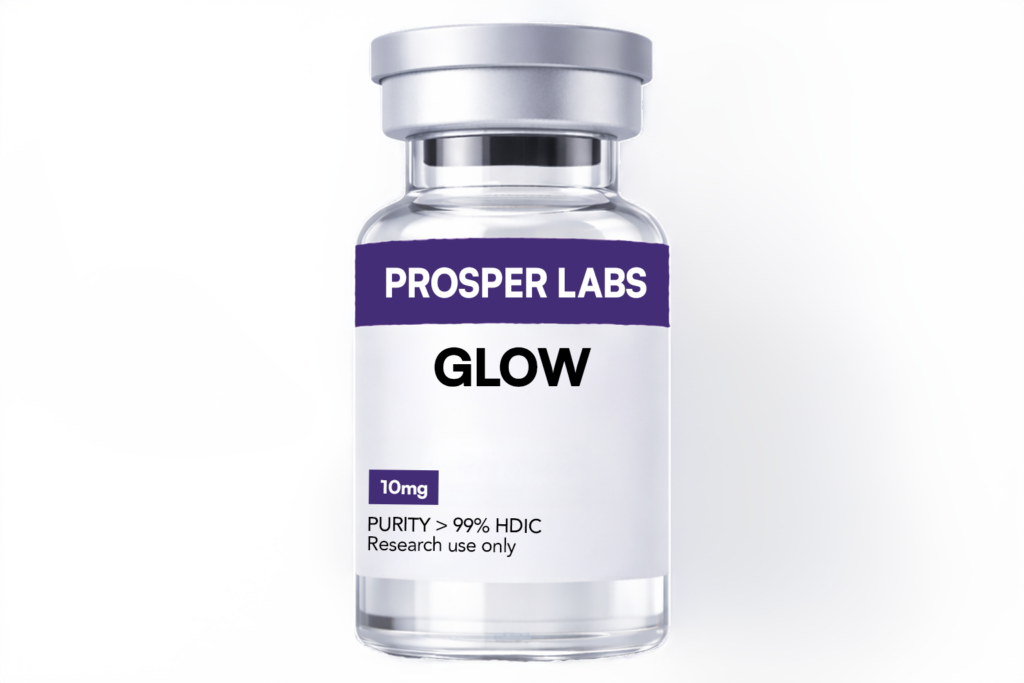
Glow
For research / laboratory use only. Not for human consumption.
Product Description
Glow| Research Use Only
What it is
Glow is a proprietary research formulation name rather than a universally standardized single peptide identity. It is most appropriately described as a branded laboratory product title used for a defined blend or composition, with the exact scientific identity depending on the listed active ingredients, their concentrations, and the analytical documentation associated with the specific batch. In research settings, product names of this kind are interpreted through their underlying composition rather than as standalone recognized compound names.
Origins and development
Glow is not a pharmaceutical code name tied to an FDA approved drug program. The name is most commonly used in commercial or branded research product contexts, where the scientific meaning of the product comes from its ingredient list, certificate of analysis, and identity testing rather than from the product nickname itself. This distinction matters because proprietary formulation names can refer to different compositions across different sellers or development contexts, even when the branding sounds similar.
Molecular profile
Glow does not have one fixed molecular formula or one universally accepted molecular weight unless it is defined as a single isolated compound. Instead, the molecular profile of Glow must be described component by component, since each ingredient in the formulation may have its own formula, molecular mass, salt form, and analytical considerations. This is important because public databases such as PubChem classify compounds by exact chemical or peptide identity, not by broad marketing style names, so the correct molecular description of Glow depends on the exact actives present in the formula.
Scientific overview
In simplified terms, Glow is best understood as a branded research formulation that may be positioned around skin related, cosmetic science, or tissue biology themes depending on its exact composition. Researchers evaluating a product sold under a name like Glow would typically focus on the known biology of each listed ingredient, the analytical quality of the batch, and whether the formulation is being used to study pathways such as extracellular matrix regulation, dermal signaling, oxidative stress related processes, peptide delivery, or other model dependent readouts. Outcomes depend strongly on the formulation itself, the experimental model, dose exposure, and the exact identity of the materials being tested.
Clinical research
Glow itself is not an FDA approved drug. Human research relevance, if any, would need to come from the individual ingredients present in the formulation rather than from the Glow name alone. Published literature may exist for certain ingredients that could appear in a Glow style formula, but that does not establish safety or efficacy for a branded product unless that exact formulation has been formally studied as its own investigational material.
What researchers study with Glow
Key research focus areas often include
• Analytical identity testing and composition verification of the exact active ingredients present in the formulation, including purity assessment and batch consistency
• Mechanistic study of ingredient level biology in laboratory models, such as dermal signaling, extracellular matrix related pathways, oxidative stress processes, or peptide delivery behavior, depending on formulation composition
• Translational context and compliance considerations for proprietary research formulations whose product name does not itself define a single standardized molecular entity
Regulatory and compliance notice
Research Use Only. Not for human or veterinary use. Glow is a proprietary formulation name and should not be interpreted as a standalone approved drug name, standardized therapeutic designation, or proof of safety or efficacy. Any scientific, technical, or regulatory discussion should be tied to the exact listed ingredients, the associated analytical documentation, and the intended laboratory context rather than to the product name alone.
Citations and references
PubChem. Nicotinamide compound record, example of how PubChem indexes exact compound identities rather than broad branded formulation nicknames.
https://pubchem.ncbi.nlm.nih.gov/compound/Nicotinamide
Li H, et al. Microneedle Mediated Delivery of Copper Peptide Through Skin. PubMed record (2015).
https://pubmed.ncbi.nlm.nih.gov/25690343/
Cook B, et al. Effects of Retinol, Natural Pea Peptide and Antioxidant Formulation on Skin Health. PubMed record (2025).
https://pubmed.ncbi.nlm.nih.gov/39720967/
Storage & Handling
Store in a cool, dry place away from direct light.
COA / Testing
Independently verified — purity by HPLC and endotoxin by LAL (USP <85>). The full reports are shown below.
Jump to COA & EndotoxinShipping
Same-day shipping on orders placed before 12:00 PM PST · 2–3 day delivery via USPS Priority. Discreet packaging.
Third-Party Tested
Every batch is independently verified by Freedom Diagnostics — purity by HPLC and endotoxin by the LAL assay (USP <85>). Both certificates are shown in full below.