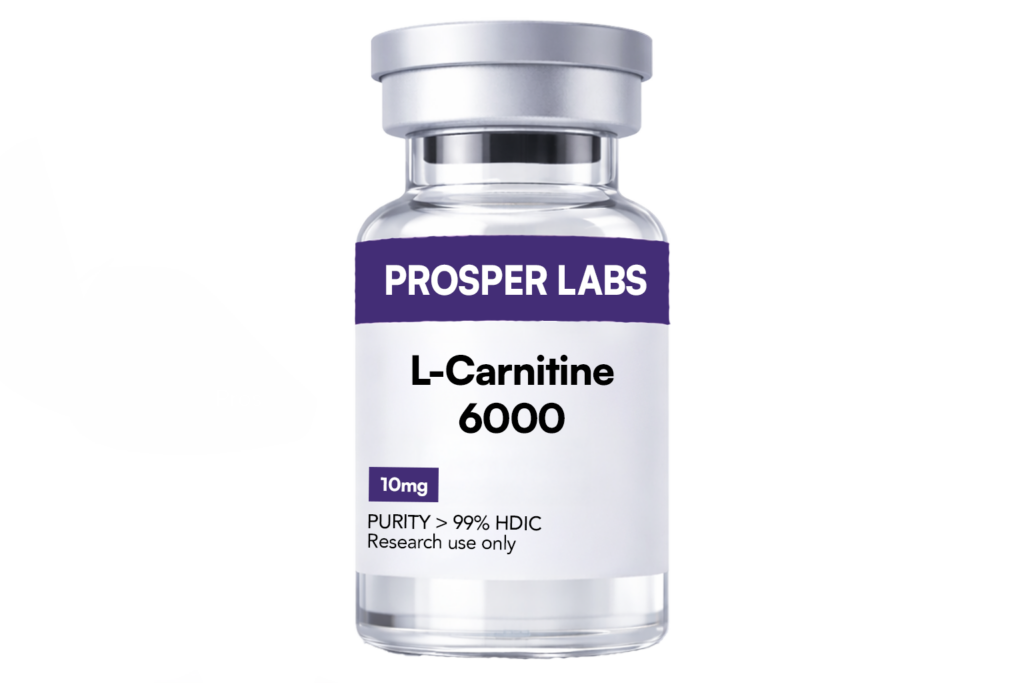
L-Carnitine 6000MG
For research / laboratory use only. Not for human consumption.
Product Description
L-Carnitine | Research Use Only
What it is
L-Carnitine is a naturally occurring quaternary ammonium compound involved in cellular energy metabolism. In the scientific literature, it is widely described as a key molecule in the transport of long-chain fatty acids into mitochondria for β-oxidation, which is why it is commonly studied in metabolism, mitochondrial biology, and cellular energy research.
Origins and scientific context
L-Carnitine is not a synthetic peptide analog but an endogenous compound biosynthesized in mammals from lysine and methionine through multi-step enzymatic pathways. Reviews of carnitine biology describe its synthesis mainly in the liver and kidney and emphasize its importance in maintaining mitochondrial substrate handling and acyl-group balance.
Molecular profile
PubChem lists L-Carnitine with the molecular formula C7H15NO3 and a molecular weight of approximately 161.20 g/mol. It is commonly identified as the naturally occurring (-)-carnitine isomer, which is the biologically relevant form discussed in metabolic research.
Scientific overview
In simplified terms, L-Carnitine is used in research to study fatty acid transport, mitochondrial function, acyl-CoA buffering, and energy metabolism. Foundational reviews describe its established role as a carrier of activated fatty acids and acetate across the inner mitochondrial membrane, while newer reviews expand its relevance to broader mitochondrial and metabolic research contexts.
What researchers study with L-Carnitine
Key research focus areas often include
• Mitochondrial fatty acid transport and β-oxidation
• Carnitine biosynthesis and transport systems
• Cellular energy metabolism and acyl-group balance
• Oxidative stress and redox-related experimental models
Regulatory and compliance notice
Research Use Only. Not for human or veterinary use. This description is provided for scientific context and must not be used to market L-Carnitine for diagnosis, cure, mitigation, treatment, or prevention of disease.
Citations and references
PubChem compound entry for L-Carnitine, includes molecular formula and molecular weight.
Storage & Handling
Store in a cool, dry place away from direct light.
COA / Testing
Certificate of Analysis coming soon. Every batch is third-party tested at >99% HPLC purity.
Shipping
Same-day shipping on orders placed before 12:00 PM PST · 2–3 day delivery via USPS Priority. Discreet packaging.